
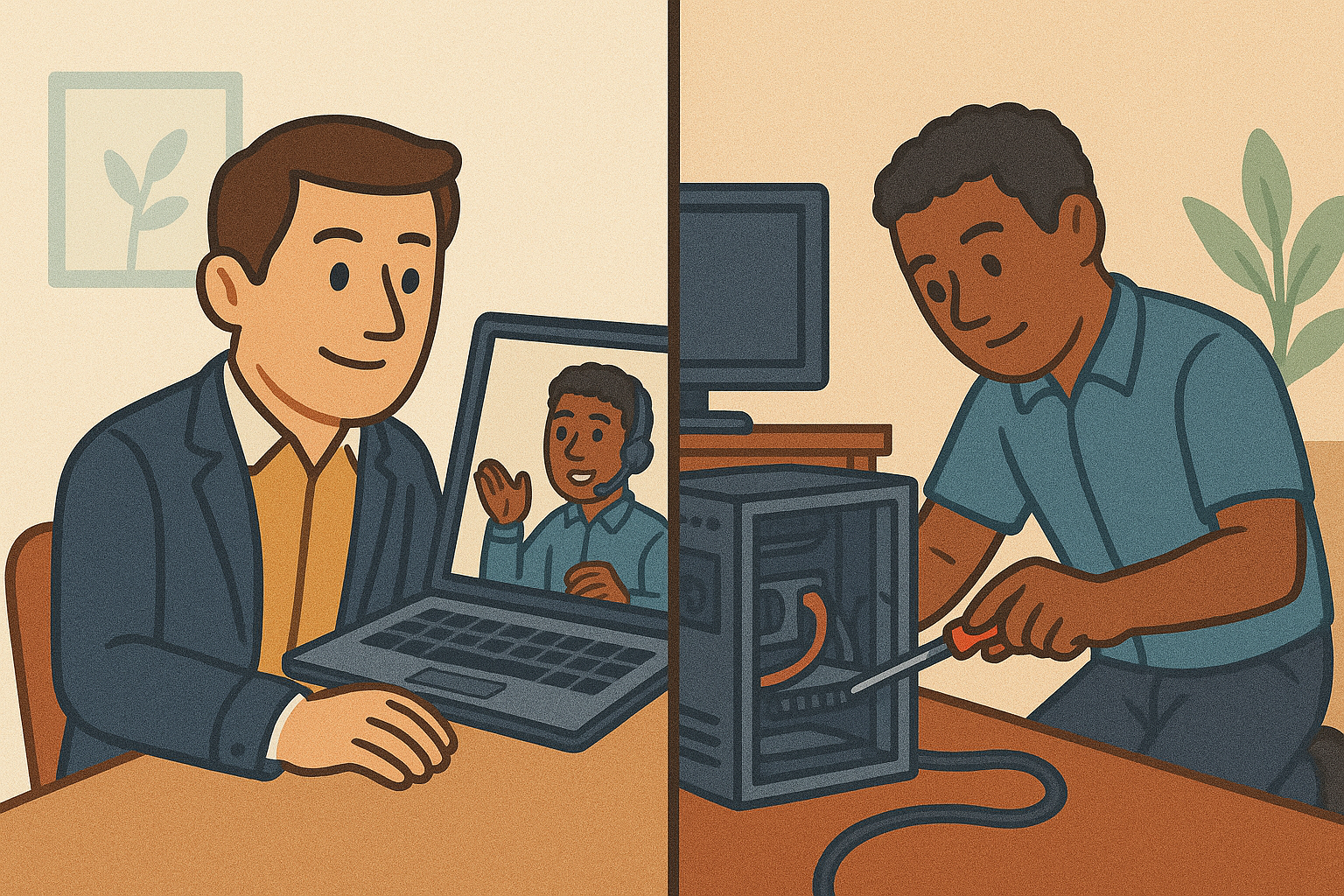
Do you need IT people sitting in your office, or can everything be handled remotely? The truth is, most businesses don’t need someone camped out at a desk down the hall. The majority of issues today can be solved remotely — faster and cheaper.
But there are still times when you need boots on the ground. The trick is knowing the difference.
What Remote IT Support Is Great For
Remote support covers way more than most people realize. With today’s tools, a good tech can:
- Reset passwords.
- Install or update software.
- Monitor your systems for trouble.
- Help users troubleshoot problems on their computers.
- Handle security alerts.
Done right, remote support means you get help in minutes instead of waiting hours for someone to drive across town.
When You Really Do Need Someone Onsite
Not everything can be solved from afar. Some problems still require a human in the building, like:
- Hardware failures (dead servers, fried equipment).
- Physical installations (new workstations, cabling, Wi-Fi expansion).
- Certain network issues that require someone to lay hands on equipment.
- Major upgrades or audits where “being there” matters.
These aren’t everyday issues, but when they pop up, you don’t want a provider who only knows how to work through a screen.
The Myths About Remote Support
Plenty of business owners worry that remote means “less personal” or “lower quality.” Not true.
- Myth: “They won’t understand my business if they’re not here.”
Reality: Location doesn’t equal competence. Good support is about listening and solving, not proximity. - Myth: “They can’t fix things if they’re not onsite.”
Reality: Most fixes don’t require anyone to step foot in your office. - Myth: “Remote support means I’ll just get brushed off.”
Reality: That depends on the provider’s culture, not their location. Respect travels just fine through a phone line.
So What Do You Actually Need?
You need both — mostly remote, with onsite available when it counts.
The best providers don’t make you choose. They solve 90% of your issues remotely to save you time, but they also show up when the job requires hands-on work. That balance is what keeps your business running smoothly.
Takeaway
Remote IT support handles the day-to-day. Onsite handles the exceptions. If a provider leans too hard on one side or the other, you end up waiting too long or paying too much.
Look for balance. That’s where you’ll get speed, efficiency, and real peace of mind.